
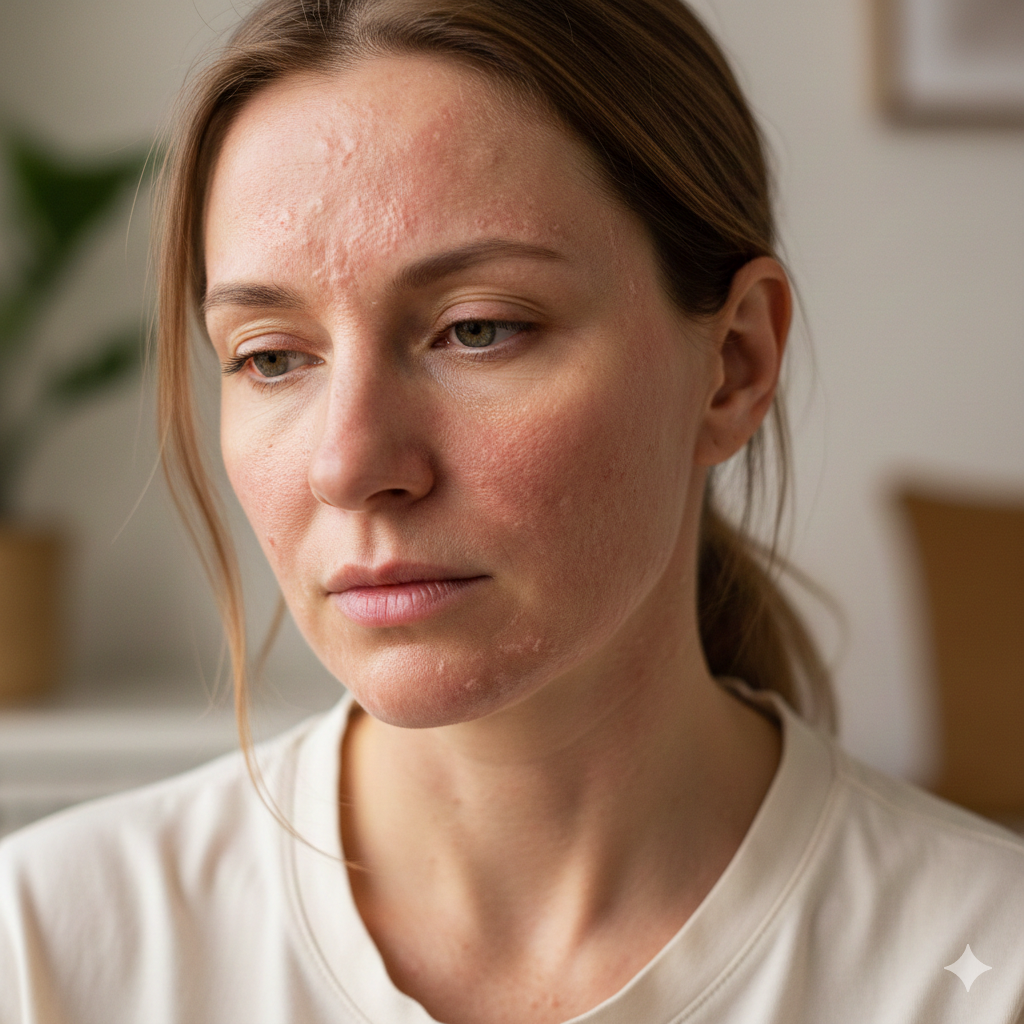
Sensitive skin has special needs – this is especially true for atopic dermatitis. Skin care for atopic dermatitis is therefore aimed at people who experience their skin as dry, sensitive, and easily disturbed. This makes skin care that supports rather than overwhelms all the more important. It’s not about quick fixes, but about conscious, well-thought-out care routines that suit the skin.
Fewer irritants, more mindfulness in skin care for atopic dermatitis
Atopic skin often reacts sensitively to external influences. Therefore, skin care for atopic dermatitis often follows a clear principle: reduce rather than overcare. Products with short ingredient lists, without strong fragrances or colorants, are preferred because they do not unnecessarily stress the skin.
This approach is also reflected in everyday life: lukewarm water, short showers, and gentle textures are considered more skin-friendly than extensive care routines with many products.
Gentle cleansing as the basis of skin care for atopic dermatitis
Cleansing is a fixed part of every care routine – also for atopic dermatitis. However, the “how” is crucial. Mild, soap-free cleansing products with a skin-neutral pH value are often used to avoid drying out the skin. Foam, strong fragrances, or highly degreasing ingredients usually do not suit skin care for atopic dermatitis.
After cleansing, the skin ideally feels clean but not tight – a good sign of balanced care.
Replenishing care for dry, atopic skin
Dry skin often benefits from rich textures. Therefore, creams or ointments with a higher fat content are frequently used in skin care for atopic dermatitis. They are traditionally used to keep the skin supple and protect it from moisture loss.
Popular ingredients in skin care for atopic dermatitis
- Plant oils and butters such as shea butter or almond oil, known for their nourishing properties.
- Humectants like glycerin or urea, which are cosmetically used to support moisture content.
- Simplified formulations that deliberately avoid unnecessary additives.
Which ingredients suit best varies individually – your own skin often gives the best clues.
A care routine that fits everyday life
Skin care for atopic dermatitis works best when it remains uncomplicated. Regular moisturizing, especially after washing, is part of the routine for many. External factors such as seasons or dry heating air are also often taken into account in care.
Instead of constantly trying new products, many rely on reliability and continuity – an approach that brings calm to daily care.
Conclusion: consciously shaping skin care for atopic dermatitis
Skin care for atopic dermatitis is above all one thing: individual. Gentle cleansing, replenishing care, and a conscious approach to ingredients form the basis of many care routines. Those who listen attentively to their skin and focus on simplicity create care that integrates well into everyday life.