
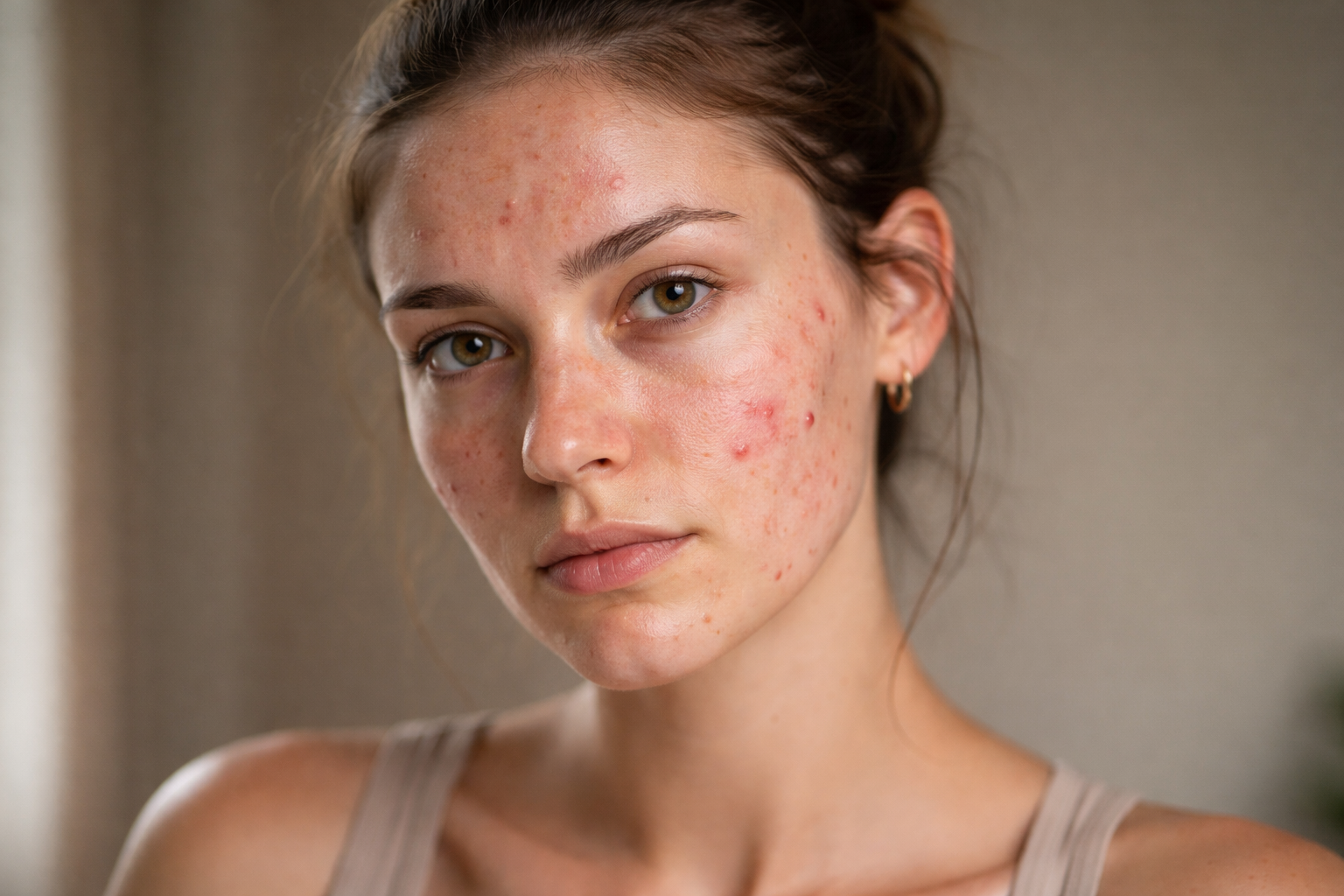
Impure skin and acne are simply part of life for many people; they can be more or less severe at times. But what to do about acne if you want more clarity and a structured approach?
Understanding Acne – What Happens on the Skin?
Acne describes a skin condition where pores become increasingly clogged and visible changes like blackheads or pimples appear. It is caused by a combination of skin type, sebum production, and external influences that can affect the skin’s appearance. Hormonal fluctuations, genetic predisposition, or environmental factors often play a role.
In skincare, acne is often grouped under the term “impure skin,” a condition that concerns many people and repeatedly raises the question of what can be done about acne in everyday life.
What to Do About Acne? Gentle Basics for Everyday Life
If you’re wondering what you can specifically do about acne, a well-thought-out skincare routine is a sensible first step. Skincare that focuses on gentle cleansing and selected ingredients can support the skin’s natural balance—not with the claim to cure acne, but with a focus on skin understanding and everyday practicality.
Cleansing – Clean but Not Overdoing It
Gentle cleansing in the morning and evening helps remove dirt, excess sebum, and makeup residues. The goal is to cleanse the skin without drying it out or irritating it. Mild formulations without harsh surfactants are often preferred for impure skin.
Care – Light and Well-Tolerated
In the context of the question “What to do about acne?” the choice of skincare products also plays a role. Ingredients like niacinamide, zinc, or plant extracts are used in many skincare concepts for impure skin because they can visually balance the skin’s appearance. Individual tolerance always remains crucial.
A commonly recommended active ingredient for acne is retinol; how retinol works on acne is explained in detail in our blog article "Retinol for Acne: How a Beauty Ingredient Everyone’s Talking About Works".
Ingredients and Skin Types – Knowledge Instead of Promises
In skincare, you’ll encounter many terms like Clean Beauty, antioxidants, or plant-based ingredients. Many people exploring what helps with acne come across different concepts and formulation approaches.
Important to know:
-
Antioxidants, vitamins, or plant extracts are traditionally used in skincare because they have certain properties that can support the skin’s surface.
-
Terms like Clean Beauty stand for a transparent formulation philosophy that consciously avoids certain additives.
-
This does not mean that skincare can cure acne—but that it is used supportively as part of a holistic routine.
Nutrition, Lifestyle, and Skin Awareness
Lifestyle factors also play a role for many people when it comes to what to consider with acne. Nutrition, fluid intake, sleep, and stress management affect the body overall and can sometimes be reflected in the skin’s appearance.
A conscious approach to these factors can help better understand connections and recognize personal triggers. It’s not about rigid rules but observation and individual adjustment.
Observe, Adjust, Understand
If you’re asking “What to do about acne?” you should consider one thing above all: skincare is a process. Changes take time, and every skin reacts differently. A clearly structured routine, combined with a conscious lifestyle and better understanding of your own skin’s needs, can help you approach everyday life with impure skin thoughtfully.
Conclusion: What to Do About Acne?
Acne is a complex topic influenced by various factors. Instead of quick fixes, observation, skin understanding, and patience are key. With gentle skincare, selected ingredients, and a conscious lifestyle, you can develop your own way of dealing with acne.