
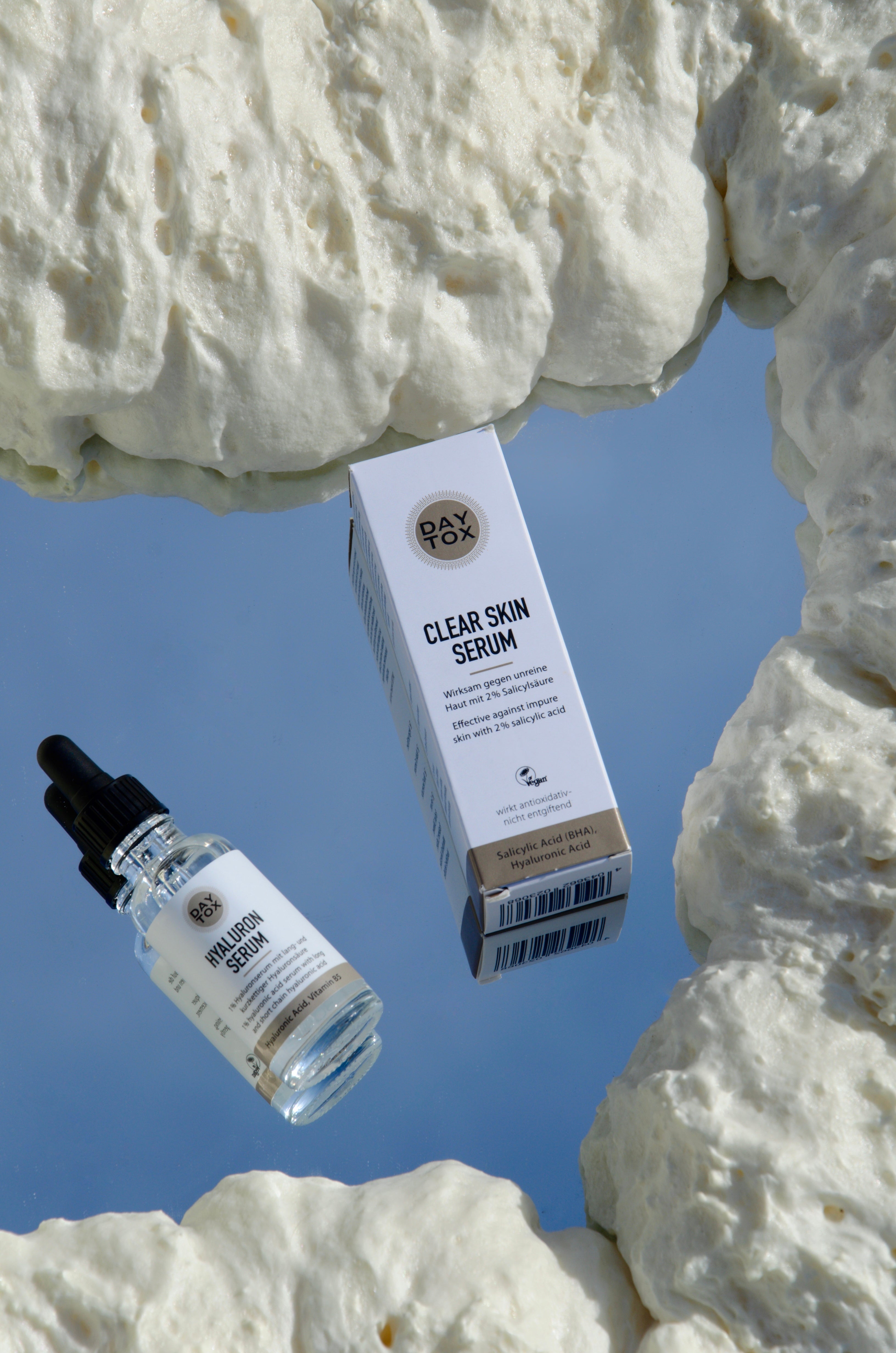
Salicylic acid for the skin is one of the ingredients frequently discussed in skincare. But what exactly is behind it, how does this active ingredient "work," and why is it found in so many products?
What exactly is salicylic acid for the skin?
Salicylic acid is a chemical compound from the group of beta-hydroxy acids (BHAs). It originally occurs in plants like willow bark and is now commonly used in skincare.
In the beauty world, salicylic acid is considered a "multitalent" because it interacts with the skin surface in a special way and is used in various product forms.
How does salicylic acid work in skincare?
Salicylic acid helps support the natural skin renewal process by gently dissolving dead skin cells. It can also penetrate pores and "clean up" where sebum and impurities accumulate.
In everyday life, this means many people appreciate salicylic acid for making the skin surface visibly smoother and the complexion clearer.
Where can you find salicylic acid in skincare products?
Salicylic acid for the skin is found in many different product categories, for example:
-
Cleansing products: cleansing gels or wash creams
-
Toners or lotions: for gentle skin refinement
-
Serums and concentrates: often in low percentages
-
Peels or masks: for more intensive treatment days
Depending on the product, the concentration and the way salicylic acid works vary, always adapted to the desired skincare experience.
Who is salicylic acid for the skin suitable for?
Salicylic acid is often used in skincare when the skin tends to be oily or a combination of oily and dry. Its special chemical structure makes it particularly compatible with these skin types.
For very sensitive or dry skin, it can be advisable to start with low concentrations and observe the skin's reaction. Accompanying moisturizing care and reliable sun protection should be ensured.
Application tips for everyday use
To integrate salicylic acid well into your skincare routine, these simple tips help:
-
Try it first: Start with a low dose and infrequent use to see how your skin reacts.
-
Don't overdo it: More is not always better here; too frequent use can dry out the skin.
-
Sun protection is important: Ingredients that stimulate skin renewal can make the skin more sensitive to UV radiation. Daily UV protection is therefore advisable.
Salicylic acid compared to other acids
Salicylic acid for the skin is often compared to other acids like glycolic acid (AHA). The key difference: salicylic acid is oil-soluble and can therefore work particularly well inside the pores, while AHAs are more active on the skin surface.
Besides targeted active ingredients like salicylic acid, there are also gentle skincare routines that can help bring impure skin into long-term balance. You can read more about this topic in our blog article "What helps against impure skin? Gentle balance instead of quick fixes".
Conclusion: Salicylic acid for the skin at a glance
Salicylic acid for the skin is a multifaceted component of modern skincare. It supports natural cell shedding and is considered a valuable ingredient in many cleansing and care formulations. It has long been appreciated not because it "heals," but because it can gently support the skin surface.